The Myth That a Public Consultation Is a Vote
A public consultation is not a vote: learn what responses can influence, how to read the stated purpose and where to look for the decision process.
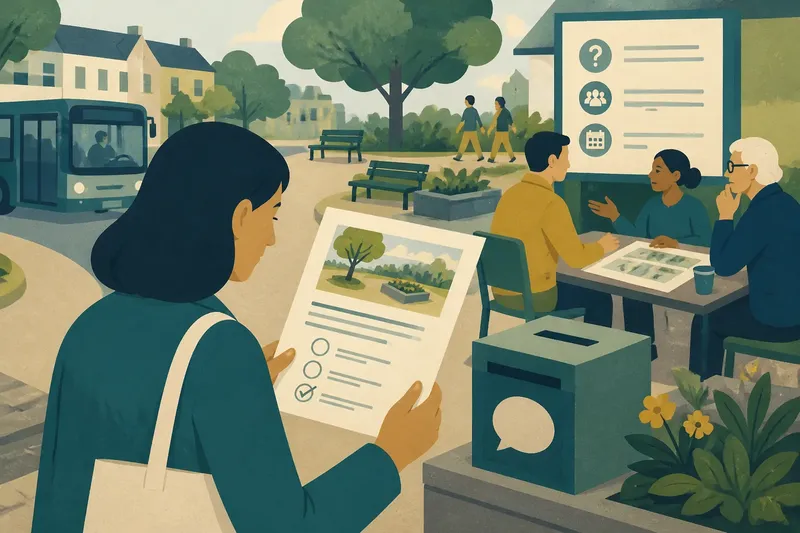
You open a council leaflet about a proposed bus-route change and find a box asking for your views. A public consultation is not a vote: it gathers responses to inform a decision, while a vote records choices under a defined process. Checking what the organiser says will happen helps you understand what your response can—and cannot—decide.
Start with the question the consultation asks
A consultation is a structured request for views on a proposal, a problem or possible options. It may ask what people value, what difficulties they anticipate, or which approach they prefer. Those answers can guide a public body, but they do not automatically settle the issue.
Read the exact wording on the form, webpage or leaflet. “What do you think of this proposal?” invites comment; “Which option do you prefer?” asks for a preference. Neither wording alone makes the exercise a binding vote. The stated purpose and decision arrangements matter too.
Say a neighbourhood is asked whether a small square should have more seating, more planting or a mixture. A resident who selects the mixed option has expressed a preference; that response does not, by itself, require the council to choose it. The council may also consider access, upkeep, available space and other relevant views.
Check whether the process defines a vote
A vote normally has a defined question, a way to identify who is eligible, a method for recording choices and a rule for interpreting the result. The rules may also explain how ties, invalid ballots or participation limits are handled. A consultation can ask people to choose between options without adopting these features.
Look for terms such as “ballot”, “referendum”, “binding”, “indicative” or “decision”. These labels are not interchangeable. An indicative poll can register preferences while leaving the final choice with a named public body. The effect of a formal vote also depends on the rules set for that process.
If the material simply says “have your say”, do not infer that the most popular response must win. Find out who will decide and what role the responses are meant to play. If that information is missing, ask the organiser to explain the process before treating the exercise as a choice with a set outcome.
Read the purpose statement before responding
Participation materials often explain their purpose near the beginning, in a “what happens next” section or beside the closing date. Read those parts together: one may describe the question under consideration, while another explains how responses will be reviewed or when a decision is expected.
Check whether the public body is asking about a settled proposal, a broad problem or options still being developed. Early engagement may help shape a proposal. A consultation on a more developed plan may focus on particular concerns or possible adjustments. The word “consultation” alone does not tell you which stage is under way.
Notice whether the form asks about a specific issue or invites wider views. A question about where a crossing might be useful is narrower than one about the overall design of a street. Keeping your response within the stated scope helps the organiser understand what you are addressing.
Separate response counts from community opinion
A report may say that respondents supported, opposed or suggested changes to a proposal. That describes the responses received, not necessarily the views of everyone affected. Some people may not have seen the invitation, had time to respond or chosen that way to take part.
The method also shapes what can be inferred. A web form, a drop-in session and a letter-writing exercise may reach different people and invite different kinds of answers. An open consultation generally seeks views from interested participants; it does not, by itself, establish what a wider population thinks.
So read “most respondents preferred option A” as a statement about those who responded, unless the report explains a broader basis for the claim. It does not mean every resident took part or that a vote was held.
Check how responses enter the decision
Useful participation materials explain what will happen to contributions. A public body might group comments by theme, assess particular concerns, revise a proposal or present responses to a committee or another decision-maker. The process may also identify issues outside the consultation’s scope.
Imagine a town asks for views on proposed changes to library opening arrangements. The form says the council will review comments about access and timing before deciding the schedule. A resident explains that evening opening would help people who work during the day. The council can consider that view alongside staffing, building use and other relevant factors before making its decision.
A consultation is a little like a suggestion box: it gives people a way to point out what matters, but it is not the same as handing each contributor a ballot that settles the choice. The form of participation tells you what kind of influence is being invited.
Use this checklist to read the decision process
Before treating responses as a result, check each point in the participation material. The decision after each observation helps you distinguish an advisory exercise from a vote and identify what remains unclear.
- Check whether the document names the person or body that will decide. If it does, look for that decision-maker’s role in the next steps; if it does not, ask the organiser who holds the decision.
- Check whether the material says responses are advisory or binding. If it says advisory, treat preferences as input rather than a settled outcome; if it says binding, read the rules that give the result that effect.
- Check whether eligibility to take part is defined. If it is, use those rules to understand whose choices count; if it is not, ask whether the exercise is an open consultation rather than a formal vote.
- Check whether the document explains how choices or comments will be recorded and interpreted. If it does, compare the reported result with that method; if it does not, ask how the organiser will assess the responses.
- Check whether the scope says which parts of the proposal remain open to change. If it does, focus your response on those parts; if it does not, ask what the decision-maker is still willing to consider.
- Check whether the material explains how themes or concerns will reach the decision-maker. If it does, look for those themes in the later report; if it does not, ask how contributions will be passed on.
- Check whether the next steps include a published response or decision. If they do, note where to find it and compare it with the stated process; if they do not, ask how participants will learn what happened.
Questions readers ask about public consultations
Does choosing an option mean it will be selected?
Not unless the process says that the choice determines the outcome. A preference question can help decision-makers compare options without transferring the decision to respondents.
Can an organisation consult people after drafting a proposal?
Yes. It may be seeking views on details, effects or possible changes rather than asking people to design the proposal from scratch. Read the stated scope to see what remains open.
Does a large response count show what the whole community wants?
No. It tells you how many responses were received, not whether they represent a wider group. Look for an explanation of who took part and how the organiser interprets the responses.
What should I do if the purpose is unclear?
Ask who will make the decision, how responses will be considered and whether the result is advisory or binding. A clear answer helps you decide what to say and how to interpret the eventual report.
Match your response to the decision being considered
Before sending a comment, identify the part of the proposal you are addressing. Explain the practical effect you expect, name the group or place affected where relevant, and say what change you would prefer. A concise reason is often more useful than a bare “support” or “oppose”.
For instance, if a consultation asks about a shared-space layout, you could describe where people on foot need an unobstructed route and why. If the question is instead about general priorities for a future plan, a detailed design suggestion may fall outside the immediate scope. The invitation’s wording helps you choose the right level of detail.
Keep a copy of the form or note the consultation’s stated purpose. When the public body publishes its account of responses or announces a decision, compare that account with what participants were told at the outset. For a public consultation, the useful question is not only which option received more support, but what the process said those views would help decide.